How to Use AI in Marketing Without Losing Authenticity
June 2, 2026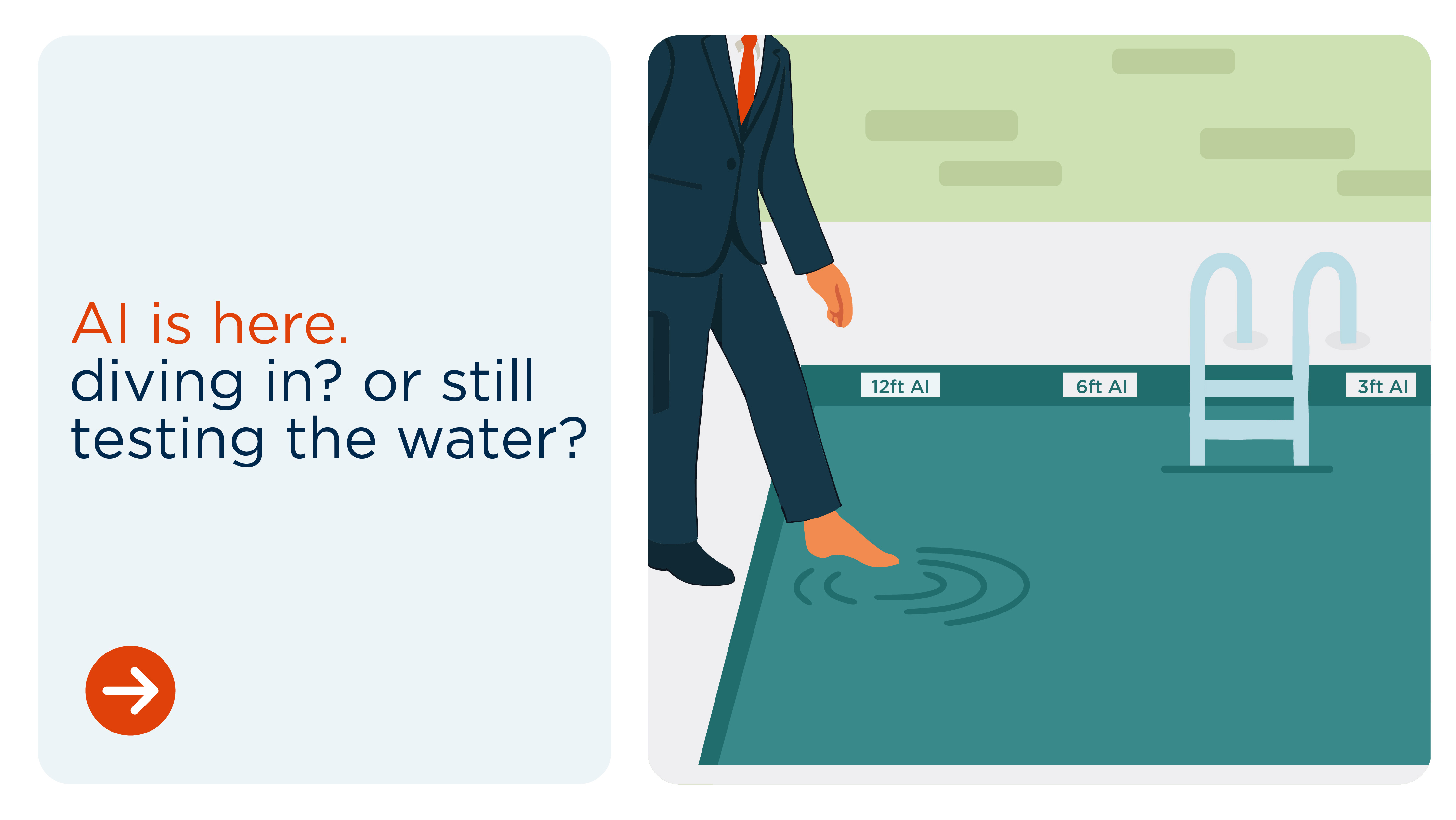
Go on, admit it. We’re all fascinated by AI.
Maybe your brand is diving in. Maybe you’re still testing the water. Either way, the water’s choppy.
At HY, we stay on the clean edge of what AI can do, helping clients decide when to use AI in marketing, how to use it, and when to stay out of the deep end.
Because yes, one of the real benefits of AI in marketing is speed. It can make the work faster, smarter, and easier to scale. That’s also the problem: what used to stand out is starting to blend in. Feeds are crowded. Attention is thin. Everything is starting to feel the same and easy to ignore.
So, here’s the line we won’t cross: authenticity. AI in advertising can accelerate the work. It cannot be the work. And it cannot replace human connection. Brands still need to feel human.
Next up, five ways we use AI across our creative process (1. Input. 2. Ideation. 3. Incubate. 4. Implement. 5. Impact.) to keep work distinct, effective and real.
use AI to digest not decide strategy.
1. input: Understanding goals, competition and audience.
goal: clear, inspirational brief
AI is powerful at synthesizing information quickly, but it doesn’t replace human research, fact checking and filtering which insights matter most to your brand.
McKinsey’s State of AI Trust in 2026 findings show that organizations get into trouble when AI moves faster than strategy or guardrails. [mckinsey.com1 ]
Use AI to
- Conduct early discovery.
- Competitor scanning.
- Brief simplification.
- Pattern spotting.
- Test/vet hypotheses.
- Finding white space.
Don’t use AI to
- Decide what the brand stands for.
- Pinpoint the bravest emotional tone.
- Decide which tensions are best to lean into.
input key takeaway: Emotion, tone and point of view aren’t hiding in the data. They’re rooted in human empathy, taste and judgment. AI can point to where your strategist might look. Only humans can decide what it should feel like once they get there.
you lead the Big Idea, use AI to explore creative areas.
2. ideation: Generating ideas that engage and motivate.
goal: memorable big idea
AI can generate options. It cannot generate taste, creative instinct or a meaningful brand point of view. Those still need to come from the people that understand the brand, the audiences and the cultural moment.
Use AI to
- Expand creative territories.
- Explore alternate angles.
- Visualize executions.
- Stress test ideas.
Don’t use AI to
- Invent the Big Idea.
- Define what your brand stands for.
- Pinpoint or land emotional tone.
ideation key takeaway: AI helps you go wider. Humans decide what’s worth pursuing. The best ideas don’t come from more options. They come from smart choices: copy that sounds a little different, design that stops you in your tracks. That’s how your Big Idea will make your audience feel the emotion you’re going for.
use AI to pressure‑test ideas before you scale them.
3. incubate: Testing, developing and refining your campaign.
goal: maximize effectiveness
Your Big Idea is approved. Now the work is to improve its distinctiveness and ensure it stays on‑brand and emotionally clear as you craft it across tactics.
Here, you’ll leverage AI to pinpoint issues, sharpen clarity, and ensure the idea holds up across platforms. This is also where you create space for creatives to push boundaries to find more compelling ways to express the Big Idea. AI can only surface what already exists. AI won’t invent what’s next, but your team will.
Use AI to
- Ensure your Big Idea is fresh (not already out there).
- Challenge clarity, tone and relevance.
- Adapts across channels. Expose weaknesses early.
Don’t use AI to
- Add meaning to a weak idea.
- Set emotional tone or brand point of view.
- Fix a Big Idea that isn’t holding together.
incubate key takeaway: Give your creatives license to explore ways to add power and disruption to your Big Idea and find new ways to express it authentically by tactic. And remember, if it doesn’t hold up here, AI isn’t going to fix the problem, it’s going to amplify it.
use AI to scale execution, once guardrails are set.
4. implement: Producing and distributing final assets.
goal: flawless execution
Strategy is clear. The idea is locked. Now it needs to show up everywhere without losing impact. This is where AI delivers. Not in deciding what to make, but in scaling it with speed and consistency.
But don’t skip the creative eye. Audiences are already skeptical of AI: the signals are easy to spot. Formulaic copy. Generic structure. Off-tone, unnatural visuals. These giveaways won’t just weaken the work, they erode trust.
Use AI to
- Create asset variations.
- Cross-check platform best practices and consistency.
- Adapt content across brand platforms.
- Speed up execution so teams can focus on craft and refinement.
Don’t use AI to
- Check itself. AI can’t spot its own issues! That’s on you.
- Use a human eye to remove the giveaways and make the work feel real.
implement key takeaway: AI is an execution engine, not a replacement for a creative director. It scales the work, but it still takes a human eye to ensure the original vision comes through clearly and consistently across every touchpoint.
use AI to learn faster not optimize harder.
5. impact: Measuring what matters.
goal: continuous optimization
Now you look back to move forward.
AI can surface patterns across performance data quickly. It cannot interpret meaning or cultural context. That still requires human judgment.
Use AI to
- Spot trends.
- Understand performance.
- Inform the next cycle.
Don’t use AI to
- Chase short-term gains.
- Optimize without understanding the “why.”
- Interpret cultural impact on its own
impact key takeaway: AI finds the signals. Humans decide what they mean, and what to do next. AI can tell you what happened. Only humans can decide what matters, and how it should shape what comes next.
final thoughts.
- Use AI as a productive tool. Not a crutch.
- Let it handle the speed so your team can focus on what actually moves people.
- Get comfortable taking risks on the work. Because in a sea of sameness, the brands that win won’t be the fastest. They’ll be the most human.
Curious if AI helped to write this article? Yes and mostly no. (Turns out with fact-checking and navigating feedback, articles may take longer to complete.) Want to know more about AI?
Get in touch, and let’s chat more.

From stat cameras (Ask AI) to the age of AI, Chris has watched and adapted to the rapid technological change that has constantly reshaped the advertising industry since his career began.

With 25 years+ of building brands that connect, Samm helps turn strategy and storytelling into creative that feels human, especially in a moment when AI is changing how the work gets made.